
← Back to catalog
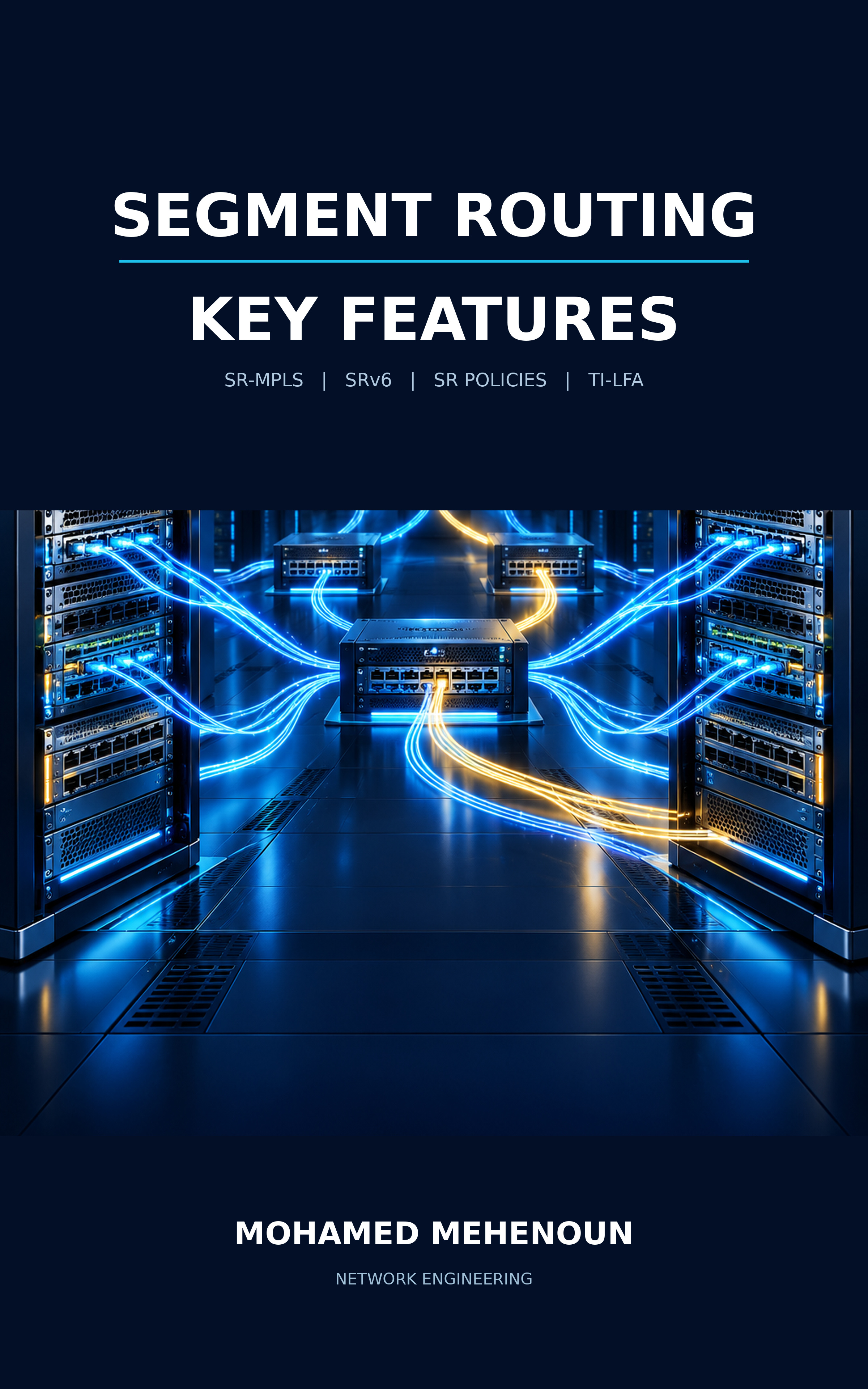
Segment Routing Key Features
This technical guide explores SR-MPLS and SRv6 architecture through a consistent six-router network, covering core concepts like Node and Adjacency-SIDs, IGP extensions, and SR Policies.
Retail buttons may lead to a title search when a direct product link has not yet been registered.
About this book
Segment Routing Key Features
A network can reach the right destination and still take the wrong path for the service it carries. Segment Routing gives engineers a way to express forwarding intent, but its real value comes from understanding the decisions made by each router.
Segment Routing Key Features explains SR-MPLS and SRv6 through one consistent six-router network. Instead of asking readers to memorize a long list of acronyms, it builds the underlying reasoning step by step: how Node-SIDs and Adjacency-SIDs differ, how MPLS label stacks carry instructions, how OSPF and IS-IS advertise segment information, and how SR Policies steer selected traffic.
The narrative then develops traffic engineering, candidate paths, Binding SIDs, fast reroute with TI-LFA, BGP VPN services, and SRv6 endpoint behaviors. Operational chapters connect these technologies to failure analysis, hardware constraints, packet-level verification, migration planning, and security boundaries.
This is an independent publication. When it discusses regulation, immigration, citizenship or official procedures, current official sources prevail.
You may also like


Canadian Citizenship Workbook
A Complete Practice Book to Prepare for the Canadian Citizenship Test
View book